

Learning to Pan for Gold the Right Way
If you are new to gold prospecting, learning how to pan for gold is where it all starts. A gold pan is cheap, simple, and it teaches you more about how gold behaves than any other tool you will ever own.
Every sluice, highbanker, and dredge works on the same basic idea as a pan. Gold is heavy, and if you shake and wash the material the right way, the gold sinks to the bottom while the lighter stuff washes away.
This guide covers the whole process step by step, the gear you need, where to look, and where you can legally pan.
Why Panning Works
According to the U.S. Geological Survey, pure gold has a specific gravity of about 19.3, and natural gold usually runs from about 16 to 18. The waste rock around it runs about 2.5. That big difference in weight is why gold can be separated with a pan, a rocker, or a sluice box.
In plain terms, gold is roughly six to seven times heavier than the sand and gravel it is mixed with. Your whole job when you pan for gold is to give the gold a chance to sink, then carefully wash off everything on top of it.
Gold does not float away easily. Most beginners lose gold because they rush, not because the gold is too light.
What You Need to Get Started
You do not need a truck full of equipment to pan for gold. A basic kit looks like this:
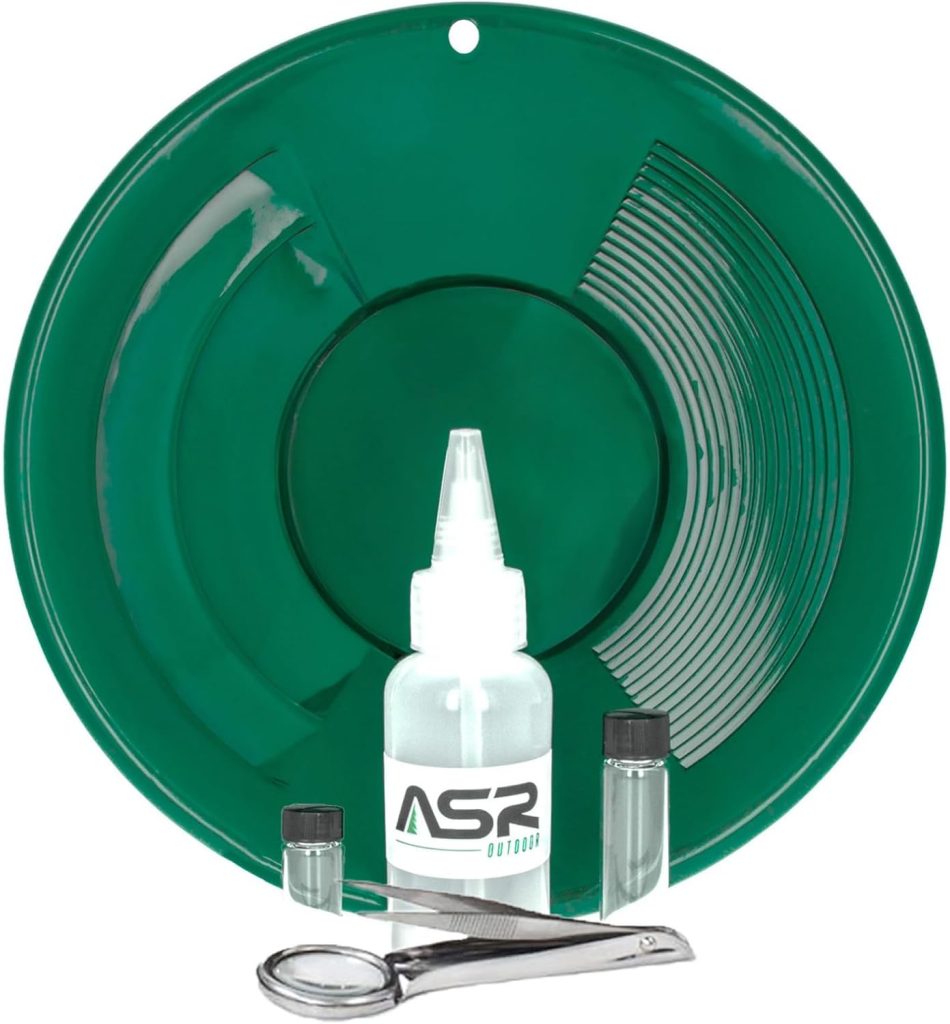
- A gold pan with riffles molded into one side. Plastic pans are light, will not rust, and the dark colors make gold easy to spot.
- A classifier (a screen that sits on top of a bucket or your pan) to remove rocks before you pan.
- A small shovel or trowel for digging material.
- A snuffer bottle to suck up small flakes.
- Glass or plastic vials to store your gold.
- A bucket for hauling and classifying material.
If you would rather get the basics in one box, the ASR Outdoor 5-Piece Beginners Kit in my shop comes with a dual riffle gold pan, a snuffer bottle, glass vials, and magnifying tweezers. Add a classifier, a small shovel, and a bucket, and you are ready to go.
Where Gold Collects in a Stream
The USGS explains that gold in stream deposits is often concentrated on or near bedrock, because it works its way down during high water when the whole streambed is moving. Fine gold also settles in low spots and in sand and gravel bars where the current slows down.
When you are looking for a spot to pan for gold, watch for:
- The inside bends of the creek, where the water slows down
- Cracks and crevices in exposed bedrock
- The downstream side of large boulders
- Places where black sand has built up
- Gravel bars that are exposed during low water
Black sand is a good sign. The USGS notes that prospectors look for gold where black sands have concentrated, since those heavy minerals settle in the same places gold does.
How to Pan for Gold Step by Step
Step 1: Classify Your Material
Run your dirt through a classifier into the pan or bucket. Getting the big rocks out first makes panning faster and helps you keep fine gold in the pan.
Step 2: Submerge and Break It Up
Put the pan under water in calm, shallow water. Work the material with your fingers to break up clay and mud. Clay can hold onto gold, so take your time here.
Step 3: Shake the Pan
Keep the pan level and underwater, then shake it side to side with some energy. This is where the gold sinks. Then pick out any larger rocks from the top, checking them before you toss them.
Step 4: Tilt and Wash Off the Top Layer
Tip the pan forward slightly, with the riffles on the low side facing away from you. Use a gentle forward-and-back or circular motion to wash the top layer of light material over the edge.
Every so often, level the pan and shake it again. That re-settles the gold before you wash off more material.
Step 5: Work Down to the Black Sand
Keep repeating the shake-and-wash cycle until only a small amount of heavy black sand is left. Slow down at this stage. This is where beginners lose the most gold.
Step 6: Look for Color
Put a little water in the pan and swirl it slowly so the black sand spreads out across the bottom. Gold will lag behind and show up as a bright yellow tail. Pick out the pieces you can see and use your snuffer bottle for the small flakes.
If you have a lot of black sand left over, save it. I go through my full cleanup process in How to Get Gold Out of Black Sand With No Mercury.
Common Beginner Mistakes
- Panning too fast. Speed comes with practice. Early on, go slow and keep the gold.
- Tilting the pan too steeply. A steep angle sends gold over the edge with the sand.
- Skipping the classifier. Big rocks keep the gold from settling to the bottom.
- Not breaking up the clay. Gold stuck in a mud ball washes out with the mud.
- Only digging the surface. Gold tends to sit lower in the gravel and near bedrock.
A good way to practice before you pan for gold in a real creek is to drop a few small lead split-shot fishing weights into a pan of gravel. If you can pan it down and keep the lead, you are on the right track.
Where Can You Legally Pan for Gold?
Before you dig anywhere, find out who owns or manages the land. Rules are different for private land, federal land, state land, and parks.
BLM Public Lands
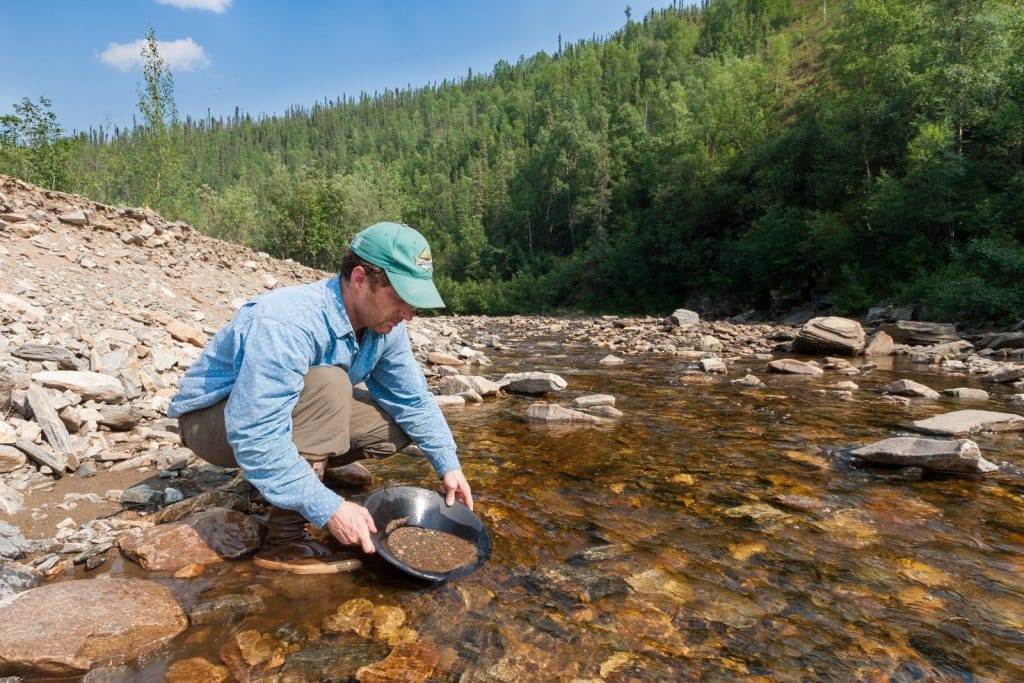
The Bureau of Land Management says that visitors may prospect with hand tools such as pans, shovels, and metal detectors, as long as it causes no more than minor surface disturbance (BLM: Can I Keep This?). BLM also says you should not collect in developed recreation sites like picnic areas and campgrounds, and that collecting on an existing mining claim is prohibited without the claim holder’s permission. That guidance covers personal, non-commercial collecting, not selling what you find.
Under BLM rules, “casual use” includes hand panning and non-motorized sluicing, but it does not include mechanized earth-moving equipment, chemicals, or explosives (43 CFR 3809.5).
National Forests
The U.S. Forest Service says most National Forests are open to recreational gold panning, and this kind of low-impact activity usually does not require any authorization (USDA Forest Service). The same document notes that some eastern forests require a letter of authorization for panning, and some wilderness areas are closed to panning. Check with the local ranger district before you go.
Mining Claims
A lot of good gold country is already claimed. BLM’s guide says minerals found on a mining claim belong to the claim holder, and claim records can be checked at BLM and county recorder offices or online through the Mineral and Land Records System (BLM collecting guide). Look for claim markers on the ground too.
National Parks and Private Land
National Park Service regulations generally prohibit disturbing or removing mineral resources in park areas (36 CFR 2.1), so do not plan on panning in a national park.
On private land, get the landowner’s permission first, preferably in writing. State lands and state parks have their own rules, so check with the agency that manages the area.
Gear From Prospectors Cache
If you are putting together your first panning kit, take a look at my Etsy shop, ProspectorsCacheShop. I list prospecting gear there, and you can also find my listings on eBay.
Final Thoughts
Learning how to pan for gold is not complicated, but it does take practice.
Classify your material. Break up the clay. Shake to let the gold sink. Wash off the top layer slowly. Slow down when you reach the black sand.
Most important, know where you are standing. Check land ownership, look for claims, and follow the rules for that area. Once panning feels natural, you will be ready to move up to a sluice or even a dredge. If that is where you are headed, read my Steps to Success in Gold Dredging.
Learn the pan first. Everything else builds on it.
Sources
- U.S. Geological Survey: Prospecting for Gold in the United States
- Bureau of Land Management: Can I Keep This?
- Bureau of Land Management: Can I Keep This? Guide to Collecting on Public Lands (PDF)
- 43 CFR § 3809.5: definition of casual use (Cornell LII)
- USDA Forest Service: Mineral, Rock Collecting, and Metal Detecting on the National Forests (PDF)
- 36 CFR § 2.1: Preservation of natural, cultural and archeological resources (Cornell LII)
- BLM Mineral and Land Records System (MLRS)
Written by Tom Ashworth
Prospectors Cache
[…] you ran all day is now in that bucket, so slow down. Pan it out carefully, the same way I cover in How to Pan for Gold: A Beginner’s Step-by-Step Guide. If you end up with a lot of black sand, my process for getting gold out of black sand with no […]