

A Practical Cleanup Method for Fine Gold and Dredge Concentrates
One of the most common questions gold prospectors ask is:
How do I get the gold out of black sand without using mercury?
Black sand cleanup can be frustrating, especially when you are dealing with very fine gold, dredge concentrates, lead shot, iron rocks, and heavy minerals. The good news is that you do not need mercury for normal cleanup. In most cases, you can recover your gold safely and effectively using screens, careful water separation, a magnet, and patient finishing work.
This article explains a practical cleanup method I have used after running a suction dredge. The same basic idea can also be adapted for highbanker concentrates, sluice concentrates, or material from a recirculating cleanup system.
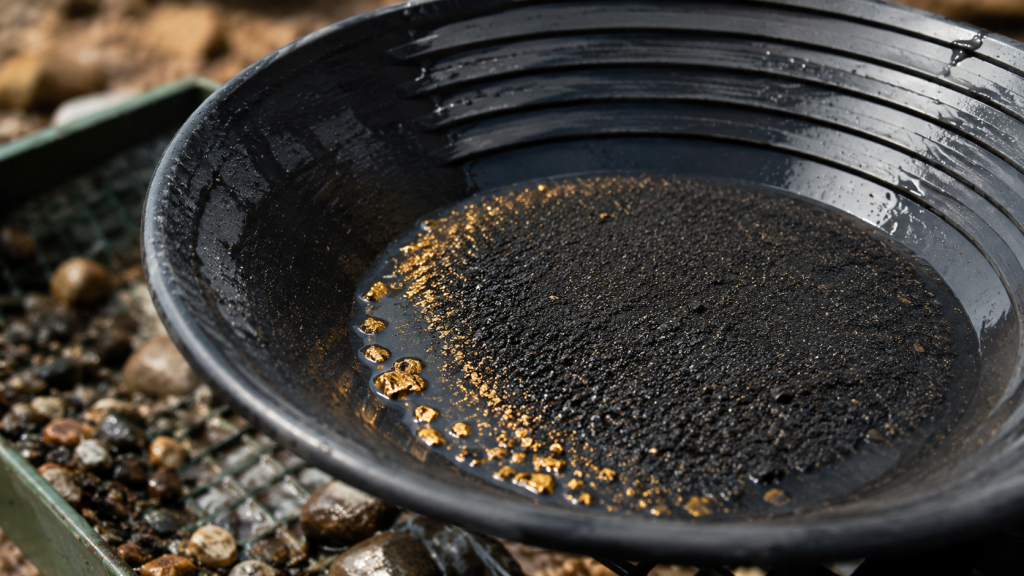
Start With Good Sluice Box Setup
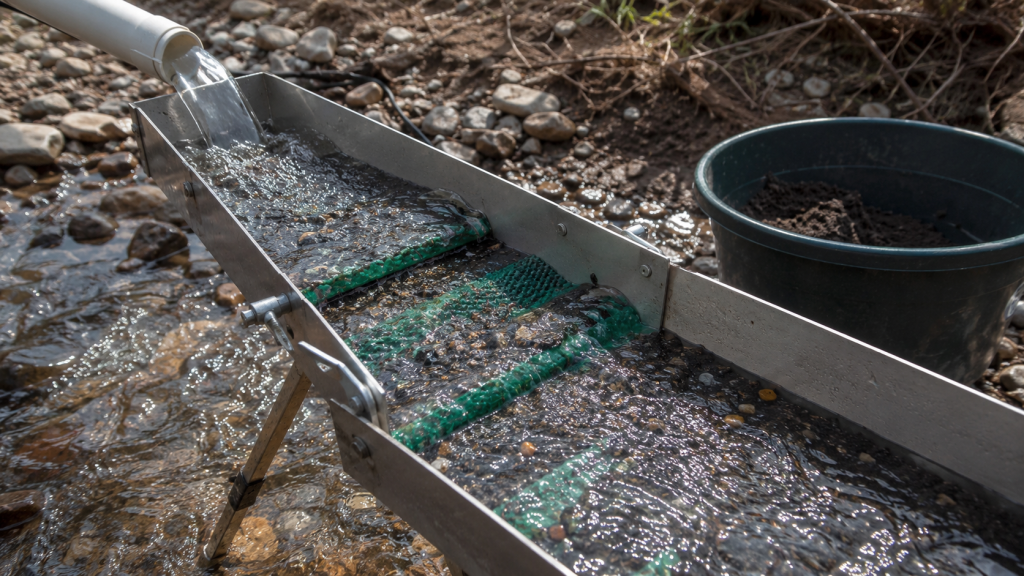
Good cleanup starts before you ever shut the dredge down.
A lot of new miners clean up too often. Every time you stop to clean the sluice, you lose dredging time. If your sluice box is running correctly, you should not need to clean the whole thing every hour.
On many store-bought dredges, a once-a-day cleanup is usually enough, unless the sluice is packing up or the material changes.
A good sluice setup should have:
- Enough water flow to move light sand and gravel
- Enough riffle action to trap black sand and gold
- No heavy packing between the riffles
- No excessive water speed that blows gold out
A practical visual rule is this:
You should be able to see about 1/4 inch of carpet or matting between the gravel behind one riffle and the next riffle below it.
If the riffles are packed solid, the sluice is not working efficiently. If the water is too fast and sweeping the riffles clean, you may be losing fine gold.
Once the sluice is running right, dredge and let the box do its job.
Daily Cleanup From the Dredge
After dredging for the day, I like to empty the concentrates into a large wash tub.
From there, I classify the material with a 20-mesh screen into a 5-gallon bucket.
The larger material that does not pass through the 20-mesh screen can be panned at the river. This is where I look for larger pieces of gold, including pickers or nuggets. Any gold found in that larger material goes straight into a vial.
The smaller material that passes through the 20-mesh screen becomes the main concentrate for final cleanup.
This step is important because classification makes everything easier. Fine gold and black sand are much easier to separate when the material is screened to a consistent size.
Running Concentrates Through a Cleanup Sluice
After screening, I like to run the fine concentrates through a smaller cleanup sluice.
A Keene cleanup sluice, Le Trap sluice, or similar small sluice can work well. In my old setup, I used a modified Keene A-52 sluice with matting added near the top to help catch fine gold.
The basic idea is simple:
- Place the cleanup sluice where it has controlled water flow.
- Adjust the water so it is strong enough to wash away light sand.
- Keep the flow gentle enough to hold black sand and fine gold.
- Slowly feed the screened concentrates into the sluice.
- Let the cleanup sluice reduce the material down to a much smaller amount of heavy concentrate.
The goal is not to finish the gold completely at this stage. The goal is to reduce the bulk.
After running the material, empty the cleanup sluice into a bucket. At this point, you should have a much smaller amount of heavy black sand and gold concentrate.
Final Cleanup Without Mercury
There are many ways to finish the last cleanup.
You can use:
- A gold pan
- A spiral panning wheel
- A micro sluice
- A Miller table
- A blue bowl
- Careful hand separation
- A magnet for magnetic black sand
For general cleanup, I prefer to avoid mercury. It is not needed for most recreational gold cleanup, and it creates serious health and environmental risks.
Nitric acid is also unnecessary for normal black sand cleanup. There may be special situations where chemicals can be used in refining, but for ordinary placer gold cleanup, mechanical separation is usually the better choice.
Gold is heavy. Black sand is heavy too, but gold is heavier. The job is to reduce the material slowly and carefully without rushing.
Step-by-Step Final Cleanup Method
Step 1: Dry the Concentrates
Pour the gold and black sand concentrates into a metal pan and dry them with gentle heat.
Use low heat only. Do not get the material hot enough to melt lead or create fumes. A portable hot plate works well for this.
Do this outside or in a well-ventilated area. Stay upwind of the pan.
Important safety note: old placer gold can sometimes contain traces of mercury from historic mining areas. Heating mercury-contaminated gold can release dangerous mercury vapor. Do not overheat concentrates, and do not breathe fumes from heated material.
Use a cleanup pan only for gold work. Do not use that pan for cooking afterward.
Step 2: Spread the Dry Material on Clean Paper
Once the material is dry, pour it onto a clean sheet of paper.
Good lighting helps. A white paper background makes it easier to see gold, black sand, lead, and other impurities.
At this stage, you can pick out larger pieces of junk with tweezers.
Common impurities include:
- Small lead pieces
- Iron rocks
- Rust flakes
- Bits of wire
- Non-magnetic heavy minerals
- Small pieces of trash from the river
Take your time. The cleaner you get it here, the easier the next step becomes.
Step 3: Remove Magnetic Black Sand
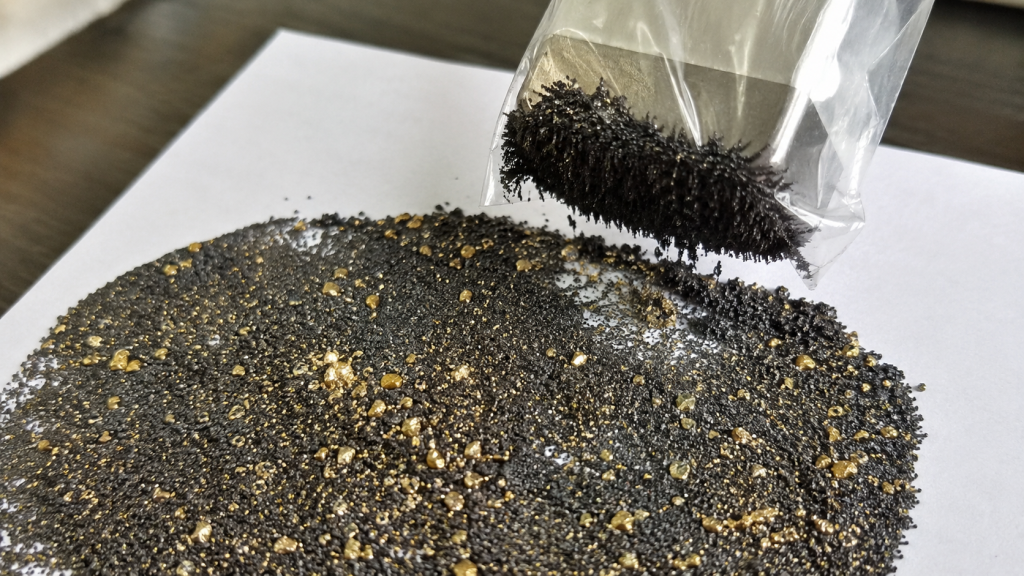
Use a magnet to remove magnetic black sand.
A strong magnet works well, but do not drag the magnet directly through the gold. Gold can get trapped in clumps of magnetic sand and be carried away.
A better method is to put the magnet inside a plastic bag or wrap it in plastic. Hover the magnet just above the material and let it pull up the magnetic sand. Then move the magnet away, turn the bag inside out, and release the sand into a separate container.
Repeat this several times.
Do not throw the magnetic sand away until you are sure there is no gold trapped in it. I recommend saving it and rechecking it later.
Step 4: Lightly Blow Away the Last Impurities
After removing most of the black sand, you can finish the cleanup by gently blowing across the dry gold.
Be careful. Very fine gold can move if you blow too hard.
This step works best when the gold is dry and spread thin on clean paper. The lighter impurities will move before the gold does.
You can also use very fine screens to separate small gold from larger pieces. Classification makes the finishing process faster and cleaner.
Step 5: Bottle the Gold
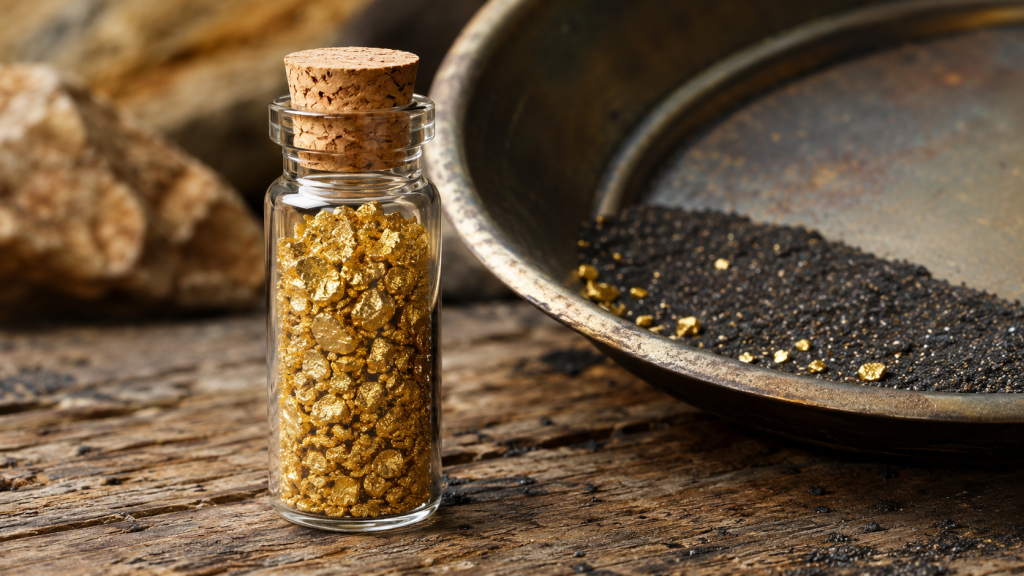
Once the gold is clean, place it in a vial.
If you plan to sell the gold, keep it dry.
If the gold is mainly for display, you can add clean water to the vial. Water makes the gold look brighter and helps protect the glass vial from breaking under the concentrated weight of the gold.
There is nothing quite like seeing clean placer gold in a vial after a good day of dredging.
Why I Avoid Mercury for Normal Cleanup
Mercury has been used by miners in the past, but that does not mean it is a good choice for normal cleanup.
For most recreational prospectors, mercury is not worth the risk.
Mercury can contaminate your equipment, your concentrates, your work area, and the environment. Heating mercury-contaminated gold can release toxic vapor. That vapor can permanently harm your health.
With patience and the right process, most black sand cleanup can be done without mercury.
The better approach is:
- Classify the material
- Reduce it with water separation
- Use a cleanup sluice or finishing tool
- Dry it carefully
- Remove magnetic black sand
- Hand-finish the gold
It may take a little more patience, but it is cleaner, safer, and more practical.
Final Thoughts
Getting gold out of black sand is not magic. It is a step-by-step process.
The key is to reduce the material slowly without losing fine gold.
Start with a properly adjusted sluice. Classify your concentrates. Run them through a cleanup system. Dry the final material carefully. Use a magnet properly. Finish the gold by hand.
You do not need mercury for normal black sand cleanup.
You need patience, classification, good technique, and respect for fine gold.
Written by Tom Ashworth
Prospectors Cache
[…] If you have a lot of black sand left over, save it. I go through my full cleanup process in How to Get Gold Out of Black Sand With No Mercury. […]
[…] for Gold: A Beginner’s Step-by-Step Guide. If you end up with a lot of black sand, my process for getting gold out of black sand with no mercury picks up where the pan leaves […]
[…] see How to Use a Sluice Box. And if your concentrates end up mostly black sand, my process for getting gold out of black sand with no mercury picks up from […]