

Hard-Learned Lessons from Behind the Nozzle
Gold dredging is one of the most exciting forms of recreational prospecting. It combines gold hunting, river reading, diving, equipment handling, physical work, and a whole lot of patience. When everything comes together, there is nothing quite like seeing gold sitting on bedrock after moving yards of gravel.
Over the years, I have learned that successful dredging is not just about owning a dredge and putting the nozzle in the water. Success comes from choosing the right equipment, working safely, sampling properly, and being honest about whether an area is worth your time.
This article covers a few of the things I have learned from experience — what works, what does not work very well, and what I would do differently after spending time dredging for gold.
Before you dredge anywhere, always check the current laws, permits, claim status, water rules, and seasonal restrictions for that area. Dredging regulations can change, and what is legal in one state or drainage may be illegal in another.
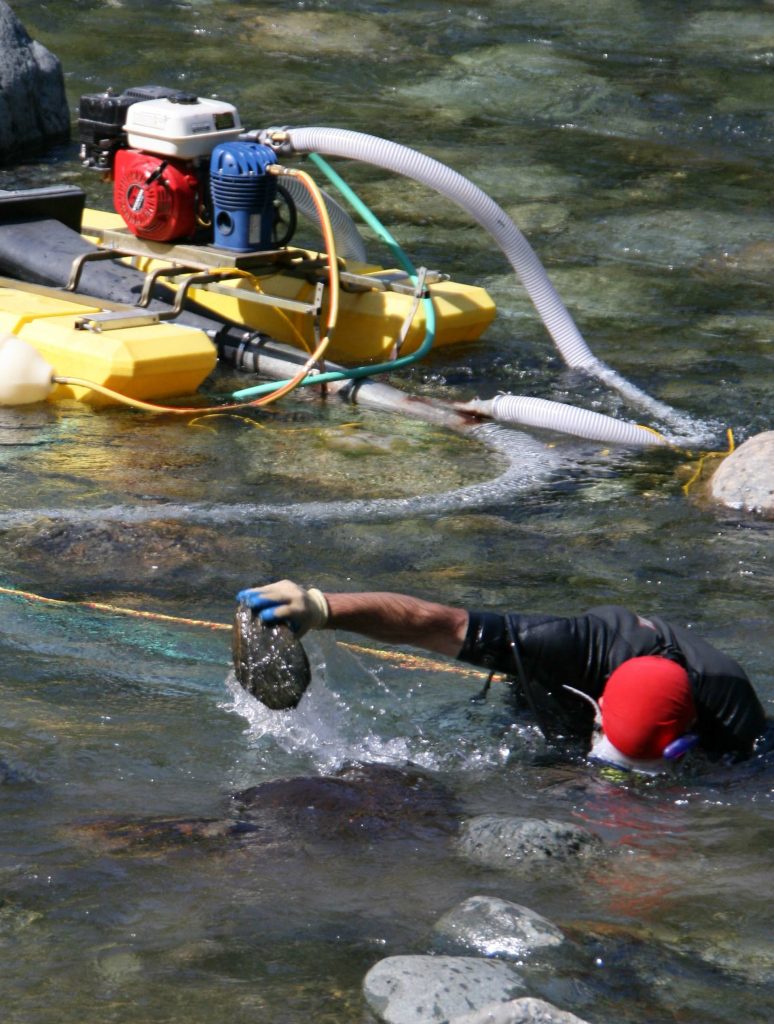
Dredging Is About More Than Moving Gravel
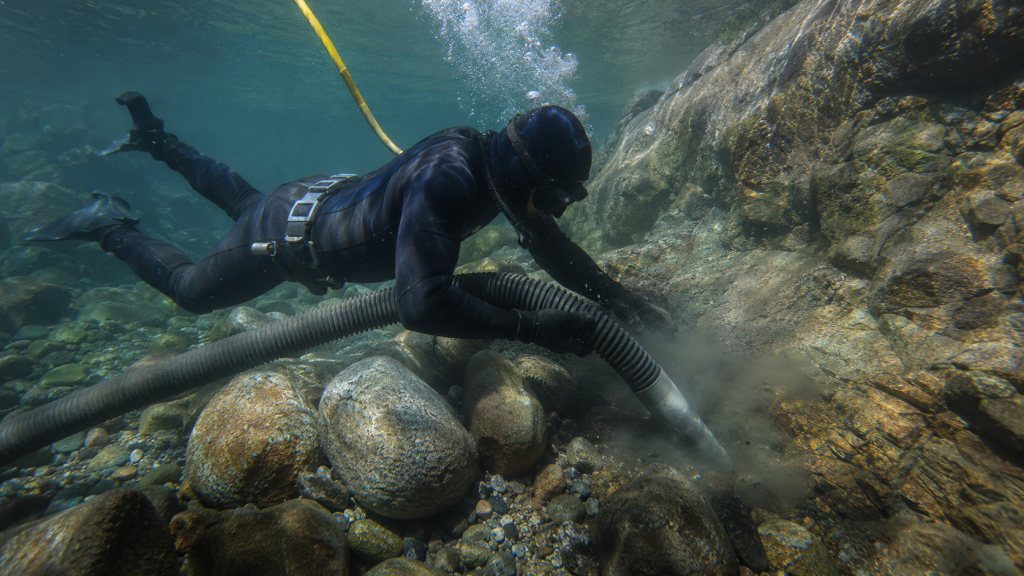
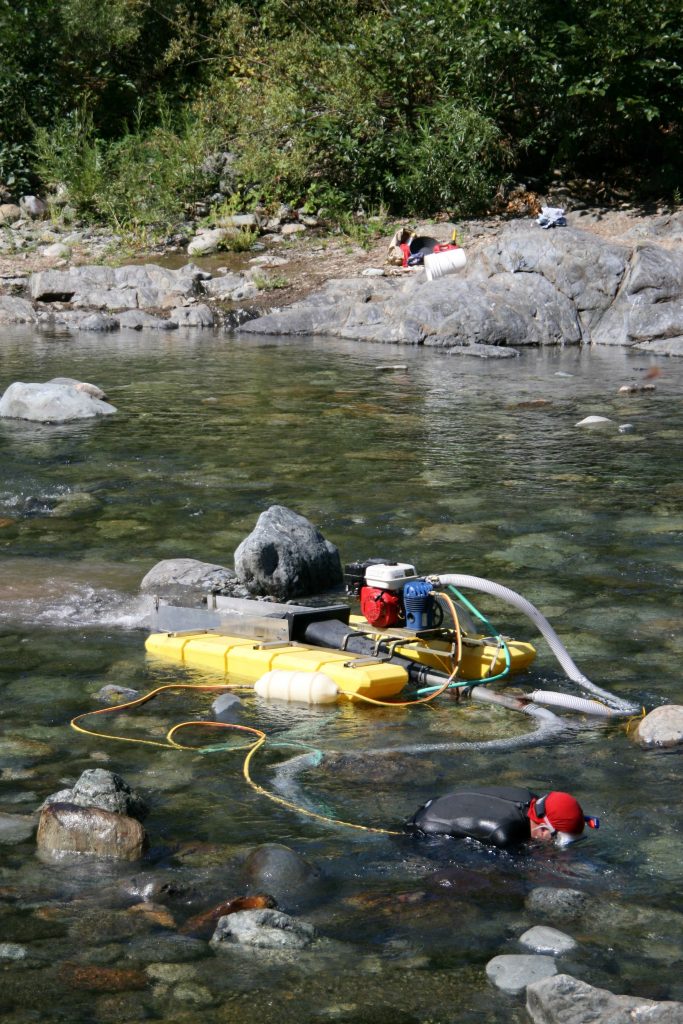
A suction dredge can move a lot of material, but moving material is not the same thing as finding gold.
That is one of the biggest mistakes beginners make. They set up in a spot that “looks good,” start dredging, and spend the entire day moving gravel without knowing whether they are actually in a pay streak.
A dredge is a tool. It is not a magic gold machine. The person behind the nozzle still has to read the river, understand where gold settles, sample the ground, and decide when to stay or move.
Good dredging requires three things:
- A safe and practical way to work underwater
- Equipment large enough to handle the material
- A sampling plan that tells you whether the gold is worth chasing
Without those three things, you can burn a lot of fuel, time, and energy for very little gold.
Diving vs. Working from the Surface
Some prospectors avoid diving because they believe it is too dangerous, too difficult, or only for younger people. Others buy a small 2-inch or 3-inch dredge without hookah air and try to work only shallow water or exposed bedrock.
That can work in certain places, especially in very shallow creeks, but in larger rivers it often becomes harder than it needs to be.
The problem is simple: most river rocks are larger than the opening on a small dredge. That means you spend a lot of time moving rocks by hand, dealing with plug-ups, and working in an uncomfortable bent-over position. If you are wearing waders and trying to work from the surface, you are constantly lifting rocks out of the water, which makes the job harder.
Underwater, rocks are easier to move. You can lay down, stay more comfortable, and see what you are doing. More importantly, you can see the bedrock, cracks, false bedrock, clay layers, and the exact material that is holding gold.
That visual feedback is a major advantage.
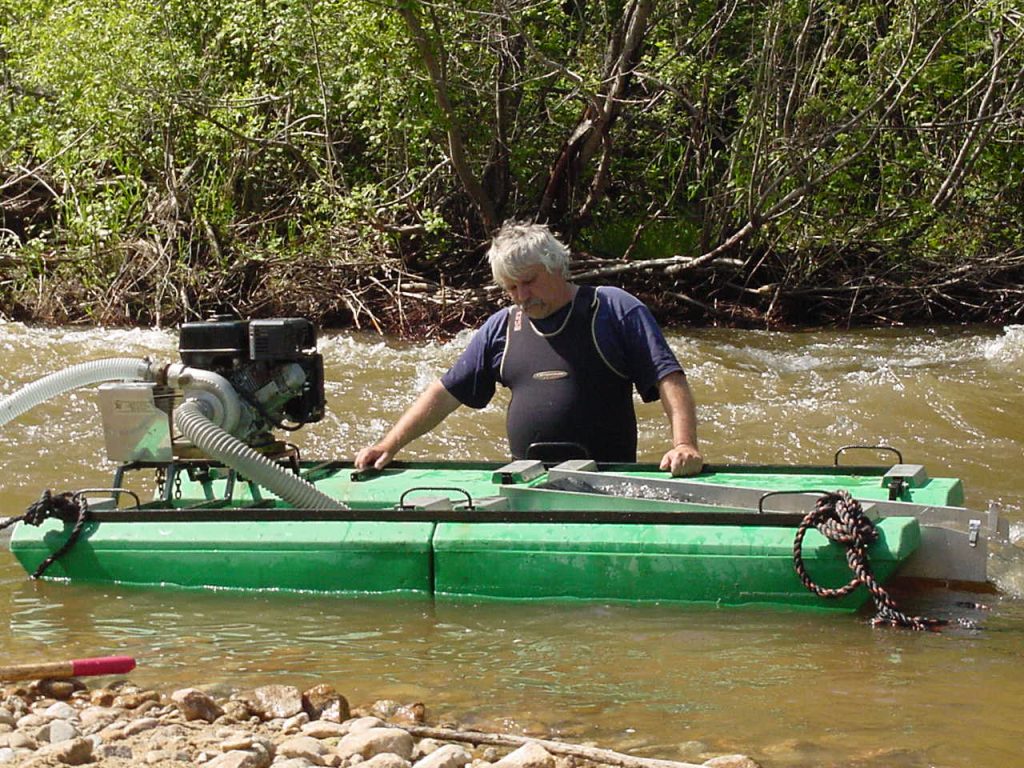
Why I Prefer a 4-Inch or 5-Inch Dredge
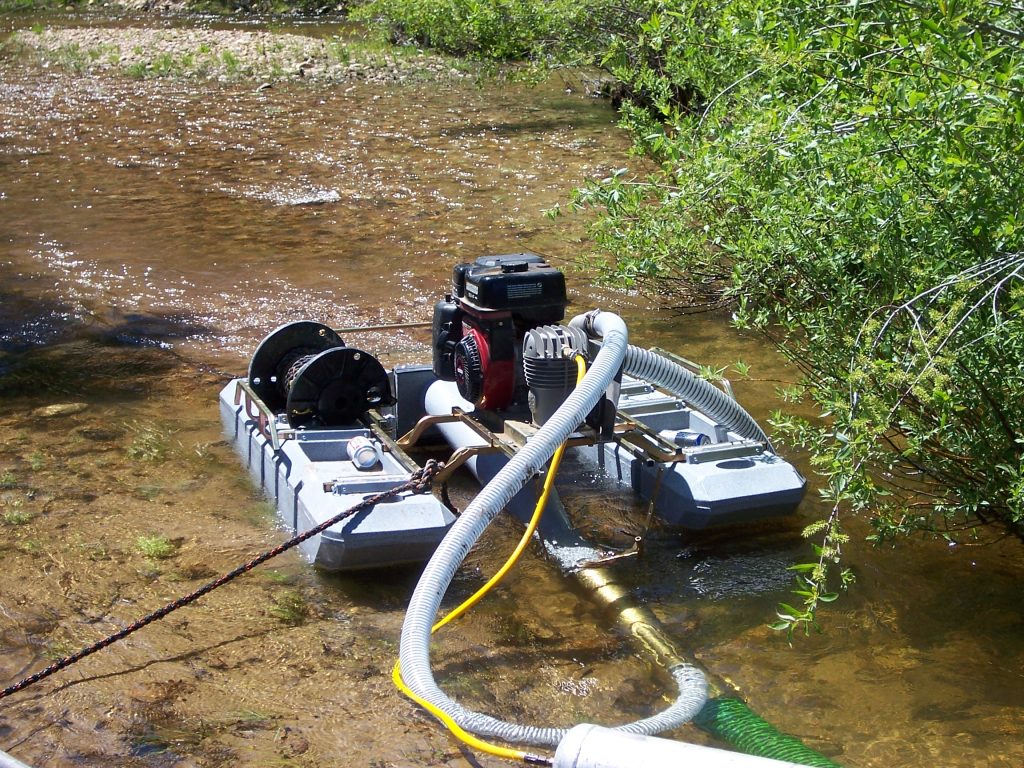
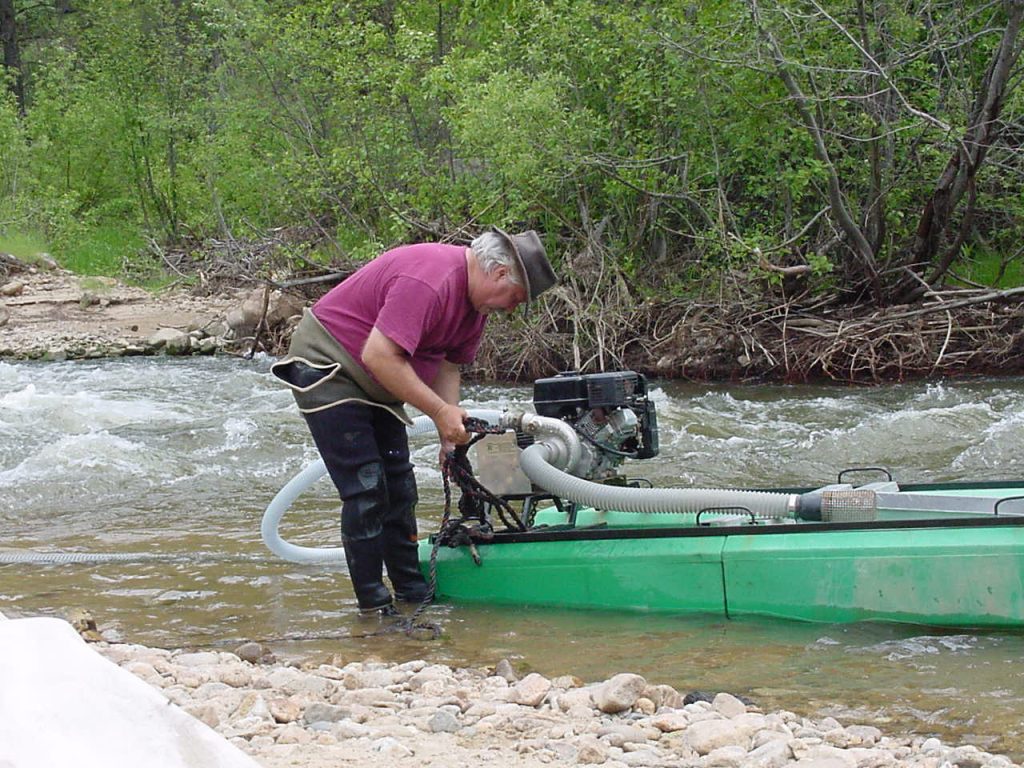
For serious recreational dredging, I believe a 4-inch or 5-inch dredge with hookah capability is a much better choice than a small dredge in many river situations.
A 5-inch dredge is not drastically harder to work than a smaller dredge, but it can move much more material. It also handles larger gravel better and usually plugs less often than smaller equipment.
A 5-inch dredge gives you enough capacity to sample bigger water, test deeper gravel, and determine whether a pay streak is worth working harder.
Small dredges have their place. They are easier to pack into remote locations and may be fine for shallow creeks. But if I had to choose one practical dredge size for serious work in larger water, I would rather have a 4-inch or 5-inch unit with hookah air than a small surface-only dredge.
Also checkout our underwater Hookah System!
Safety Comes First When Diving
Diving for gold can be dangerous if you ignore common sense. It can also be done safely when you respect the water, use proper equipment, and stay within your limits.
Most of my dredging has been in relatively shallow water, often around chest deep. Even then, I treat it seriously.
Basic safety rules matter:
- Use the right wetsuit for the water temperature.
- Wear a good mask that seals properly.
- Use reliable air equipment.
- Keep hoses, lines, and the dredge organized.
- Do not dredge in floodwater, fast current, or muddy water where you cannot see.
- Do not work alone in risky water.
- Know when to shut it down and come back another day.
A 7mm Farmer John-style wetsuit is a good starting point for cold water. When the water warms up, you can remove the jacket and use the bib section with a shirt underneath.
A good diving mask is also important. I prefer a mask with a purge valve because it makes clearing water easier. If your mask fills, tilt your head forward and blow gently through your nose to clear it.
Comfort matters too. When you are diving, you can work in a laying-down position instead of bending over all day in waders. That makes a big difference after several hours of moving rocks and running the nozzle.
The Real Key: Sampling
If there is one lesson I have learned the hard way, it is this:
The key to successful dredging is sampling.
I have wasted more time by not sampling properly than from almost any other mistake. A lot of prospectors get excited when they find a little color and immediately start production dredging. That can be a mistake.
A few flakes do not automatically mean you are in a profitable pay streak.
Before committing serious time and effort to an area, you need to answer a simple question:
Can this ground produce enough gold to justify the work?
That answer comes from sampling.
Step 1: Decide Your Minimum Daily Goal
Before you start, decide how much gold you need to recover in a day for the work to be worth it.
That number will be different for every prospector. Some people are happy just being out on the river. Others need enough gold to pay for fuel, permits, food, equipment wear, and travel.
In my original system, I used a daily goal of 1/2 ounce of gold. That was my personal benchmark at the time. Your number may be higher or lower.
The exact number is not the point. The point is that you need a target before you can judge a sample.
Without a daily goal, you are guessing.
Step 2: Decide How Deep You Are Willing to Dredge
The deeper the overburden, the more work it takes to reach the gold-bearing layer.
A simple rule I have used is this:
Remove about 1 foot of overburden for every 1 inch of suction hose diameter.
Using that rule:
- With a 4-inch dredge, I might be willing to work through about 4 feet of overburden.
- With a 5-inch dredge, I might be willing to work through about 5 feet.
- With a 6-inch dredge, I might be willing to go deeper if the gold justifies it.
This is not a law of nature. It is a practical planning rule. The real decision depends on water depth, current, boulder size, access, gold value, and how much time you have.
The point is to match the job to your equipment.
A shallow pay streak with moderate gold may be worth working. A very deep deposit with the same amount of gold may not be worth it unless you have bigger equipment and enough time.
Step 3: Pick the Right Area to Test
Before hauling in equipment, study the area.
Look for:
- Historical gold production
- Old mining reports
- Exposed bedrock
- Inside bends
- Natural riffles
- Crevices and cracks
- Large boulder traps
- Hardpack layers
- Places where heavy material would settle
- Reasonable access for your equipment
Accessibility matters. A location may look great, but if it takes a week to pack in a dredge and you only have a few days off, it may not be practical.
Gold prospecting is not just about where gold exists. It is about where you can realistically recover it.
Step 4: Sketch the Area and Plan Your Sample Pattern
Before you start dredging randomly, sketch the area.
It does not have to be fancy. A simple notebook drawing is enough.
Mark:
- River direction
- Boulders
- Exposed bedrock
- Gravel bars
- Current breaks
- Your sample holes
- Any gold recovered from each sample
This gives you a visual record of what you tested. It also helps you see patterns.
A pay streak is rarely shaped like a perfect rectangle. It may run along a bedrock crack, behind boulders, along a clay layer, or through a narrow channel. Sampling helps you find the direction of that streak.
Step 5: Dredge a Measured Sample Hole
A sample hole should be measured so you know how much material you moved.
For example:
12 feet long × 9 feet wide × 3 feet deep = 324 cubic feet
There are 27 cubic feet in one cubic yard.
324 ÷ 27 = 12 cubic yards
So that sample hole contains about 12 cubic yards of material.
Now you can compare the gold recovered from that sample against your daily goal.
Step 6: Estimate Your Real Dredge Capacity
A dredge may have a rated capacity, but real-world production is usually lower.
For example, if a 5-inch dredge is rated at 12 cubic yards per hour, I would not assume I will actually move 12 yards every hour in real river conditions.
Rocks, plug-ups, boulders, depth, visibility, current, and cleanup time all reduce real production.
In my old formula, I used about two-thirds of rated capacity.
So if a 5-inch dredge is rated at 12 cubic yards per hour:
12 × 0.667 = about 8 cubic yards per hour
If I work 8 hours:
8 cubic yards per hour × 8 hours = 64 cubic yards per day
That gives me a practical daily production estimate.
Step 7: Calculate Whether the Sample Is Good Enough
Now compare the sample to your daily goal.
Let’s say:
- Your daily goal is 1/2 ounce of gold.
- 1/2 ounce equals 10 pennyweights.
- Your estimated daily production is 64 cubic yards.
- Your sample hole was 12 cubic yards.
First, divide your daily production by the sample size:
64 ÷ 12 = 5.33
That means your daily production is about 5.33 times larger than your sample.
Now divide your daily gold goal by that number:
10 pennyweights ÷ 5.33 = 1.88 pennyweights
That means your 12-yard sample hole would need to produce about 1.88 pennyweights of gold to meet a 1/2-ounce daily production goal.
If the sample produces less than that, the ground may not be worth working with that equipment and that goal. If it produces more, it may be worth additional testing.
Step 8: Follow the Pay Streak
If you get a good sample, do not immediately assume the whole area is good.
Dredge more sample holes:
- Upstream
- Downstream
- Left and right of the original hole
- Behind the hole
- In front of the hole
- Along likely bedrock channels
The goal is to figure out the direction, width, and length of the pay streak.
Sometimes the gold is only in a narrow run. Sometimes it opens up. Sometimes it disappears quickly. You will not know unless you test around the original sample.
Good prospectors do not just find gold. They define the deposit.
Final Thoughts
Gold dredging can be exciting, profitable, and deeply rewarding, but only if you approach it with discipline.
The biggest lessons are simple:
- Use equipment that matches the ground.
- Work safely.
- Do not dredge blind in dangerous water.
- Sample before committing to production.
- Measure your holes.
- Calculate whether the gold is worth the effort.
- Follow the pay streak instead of guessing.
A dredge can move a lot of gravel, but sampling is what tells you whether that gravel matters.
That is the real secret to success in dredging.
Written by Tom Ashworth
Prospectors Cache
Visit us on Tom Ashworth's Facebook Page
Engaging in Gold Dredging is not only about the thrill; it’s about understanding the intricacies involved in successful Gold Dredging techniques.
Effective Gold Dredging demands both skill and knowledge, making it essential for every prospector to embrace the Gold Dredging process fully.
These insights into Gold Dredging are crucial for anyone looking to succeed in this exciting adventure.
Gold Dredging is about making informed choices and adapting to the specific environment of each location.
Success in Gold Dredging requires more than just tools; it requires a strategic mind focused on the art of Gold Dredging.
Understanding the fundamentals of Gold Dredging can make all the difference between a successful day and a disappointing one.
In Gold Dredging, reading the water is just as important as the equipment you choose to use.
Learning the nuances of Gold Dredging can significantly enhance your productivity and enjoyment.
Gold Dredging is not just a hobby; it’s a pursuit that requires dedication and a willingness to learn.
For optimal results in Gold Dredging, always adapt your methods based on the conditions you encounter.
Gold Dredging offers unique challenges that can be overcome with patience and knowledge.
Understanding the process of Gold Dredging will help you make informed decisions.
Your approach to Gold Dredging should always account for safety and efficiency.
In Gold Dredging, learning to work smart will save you both time and energy.
A 5-inch dredge is an excellent choice for effective Gold Dredging due to its efficiency.
Whether you use a large or small dredge, the principles of Gold Dredging remain the same.
Employing the right techniques for Gold Dredging will yield better outcomes.
Practicing safe Gold Dredging techniques can prevent accidents and increase your effectiveness.
The right mindset is crucial for successful Gold Dredging.
Gold Dredging can be incredibly rewarding if approached with care and diligence.
Remember, Gold Dredging is as much about the journey as it is about the destination.
In conclusion, Gold Dredging combines art and science for a fulfilling adventure.
Engaging fully in Gold Dredging can lead to lasting memories and valuable finds.
[…] Most important, know where you are standing. Check land ownership, look for claims, and follow the rules for that area. Once panning feels natural, you will be ready to move up to a sluice or even a dredge. If that is where you are headed, read my Steps to Success in Gold Dredging. […]
[…] Check the land rules every time. When you are ready to move more material, the next steps are a highbanker or a dredge, and I cover dredging in Steps to Success in Gold Dredging. […]