

Beach metal detecting is one of the easiest ways to get started in this hobby. You do not need to find a gold creek or check for mining claims. You need a beach where detecting is allowed, a tide chart, and a scoop.
The beach also changes every day. Waves and tides move sand around, and people drop rings, chains, and coins all summer long. A spot that was dead last week can be good after a storm.
Learn the tide, learn the zones, and learn the rules. That is most of it.
How a Beach Hides and Uncovers Targets
Sand is always on the move. The National Park Service explains that calm, low-energy waves build up a wide berm, while high-energy storm waves cut the berm back, form a scarp, and carry the sand offshore into bars (NPS).
That matters to a detectorist. When the sand builds up, older targets get buried deeper. When a storm strips the sand away, those targets can end up closer to the surface.
So watch the weather. After a big blow, walk the beach and look for a cut bank, a lower beach face, or shell and gravel where there used to be soft sand. Those are signs the beach has lost sand, and that is where I want to swing first.
Tides: When to Go Beach Metal Detecting
Low tide opens up more beach. NOAA says spring tides happen around the new and full moon, when high tides are a little higher and low tides are a little lower than average (NOAA). Neap tides, around the quarter moons, have a smaller range.
Here on the Texas coast, do not expect a huge tide. TxDOT says the Texas Gulf Coast generally gets one high and one low tide a day, and the average daily tide range is less than 2 feet (TxDOT). TxDOT also notes that wind and local conditions change what you actually see. On the Gulf, the weather can move the water as much as the moon does.
Look up the predictions for the station nearest your beach on NOAA Tides and Currents. Then plan to arrive an hour or two before low tide and follow the water out.
Work the falling tide and get out before the water comes back.
The Four Zones of a Beach
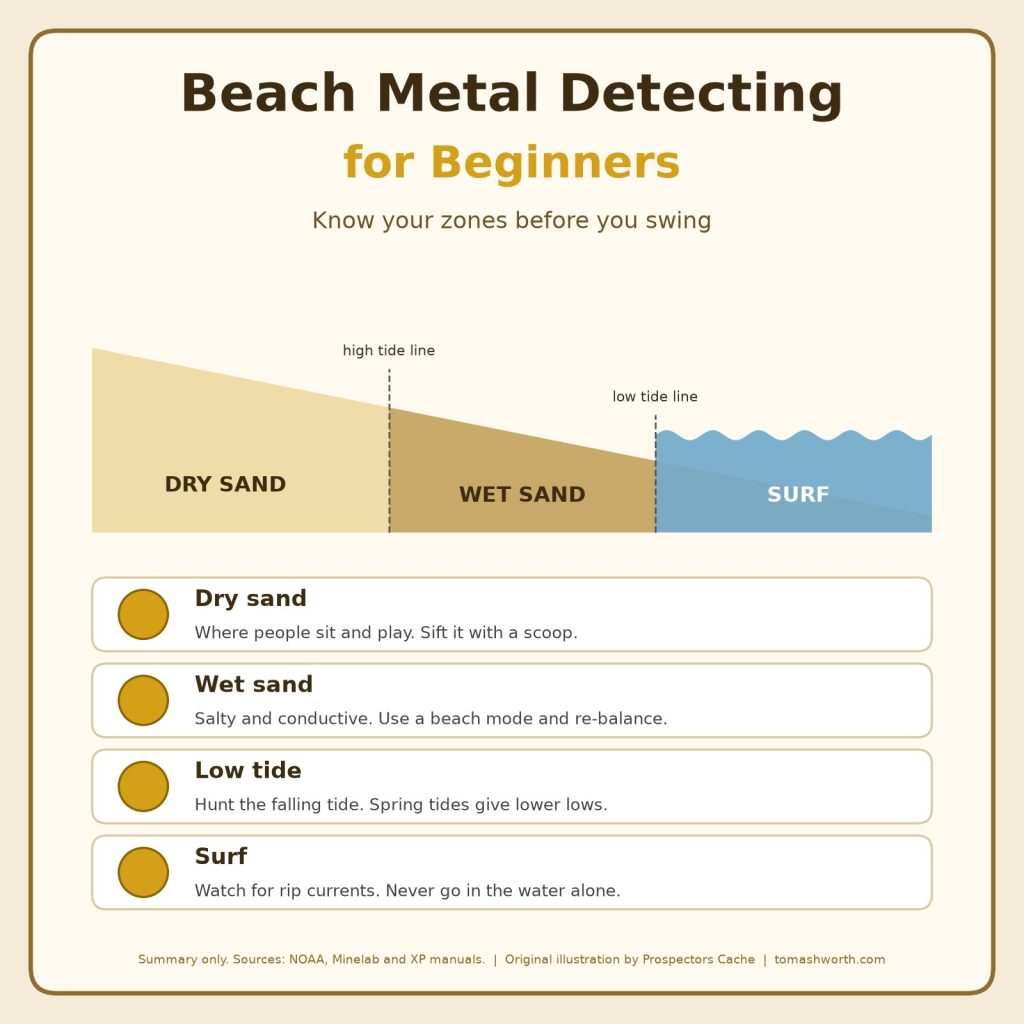
Dry Sand
The dry sand is where people spread out towels, set up chairs, and play. Most of what you find there was dropped recently, so it is usually shallow. Hunt around entry paths, volleyball nets, lifeguard stands, and anywhere people gather.
Expect trash. Pull tabs, bottle caps, and foil are part of the deal. Dry sand is easy to dig, and a long-handled scoop lets you sift a target without getting on your knees.
Wet Sand
The wet sand between the high and low tide lines is where beach metal detecting gets tricky. Salt water is conductive. The Minelab Manticore manual says its Beach modes are designed to reduce the noise caused by conductive saltwater, and they mark leftover salt response with a target ID of zero so it can be told apart from good targets (Minelab Manticore manual).
Keep the coil low and level, swing slow, and overlap your sweeps. If the detector chatters, fix the settings before you blame the beach.
Low Tide Line and Surf
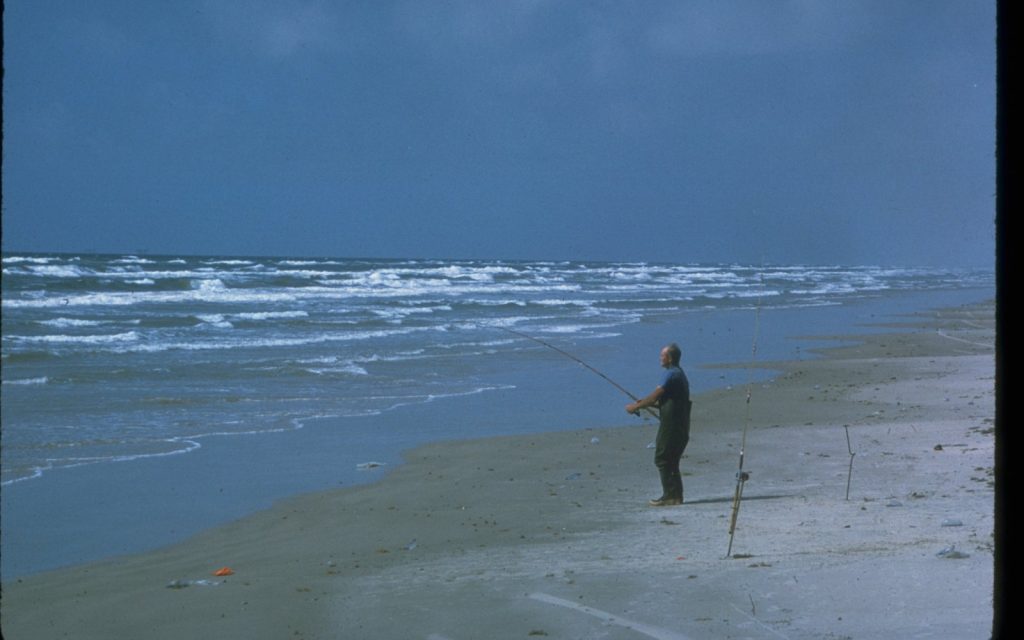
The surf zone is the hardest place to hunt and the most dangerous. NOAA warns that rip currents can quickly become dangerous to anyone entering the surf and can sweep even the strongest swimmer away from shore (NOAA). If you get caught, NOAA says not to swim against the current, and to escape by swimming along the shoreline or toward breaking waves, then at an angle back to the beach.
Never go in the water alone. If in doubt, do not go out.
Detector Settings for Saltwater Beaches
Most modern multi-frequency detectors have a mode built for beach metal detecting. Minelab says its Beach 1 profile on the Equinox and X-Terra Elite is for wet or dry beach sand and shallow water, and Beach 2 is for wading or shallow diving with the coil submerged (Minelab FAQ). The Manticore offers General, Low Conductors, Deep, and Surf and Seawater beach modes (Minelab Manticore manual).
On the XP Deus 2, the manual lists three saltwater programs: Diving, Beach, and Beach Sens (XP Deus 2 manual). XP says to sweep parallel to the ground without lifting the coil at the end of each pass. When searching wet sand or surf, XP says to adjust Salt Sens first instead of the general sensitivity.
Ground balance matters too. I covered the basics in my article on metal detecting for gold nuggets. If you want starting settings for your machine, my Dial in your Metal Detector page covers more than 40 models.
What I Use on the Beach
For beach metal detecting in wet and dry sand, I run my Deus 2 with the HF2 coil. It is my choice for small gold jewelry after big events, when a lot of people have been on the sand. For dry beaches I also use my Minelab Manticore with the M9 coil.
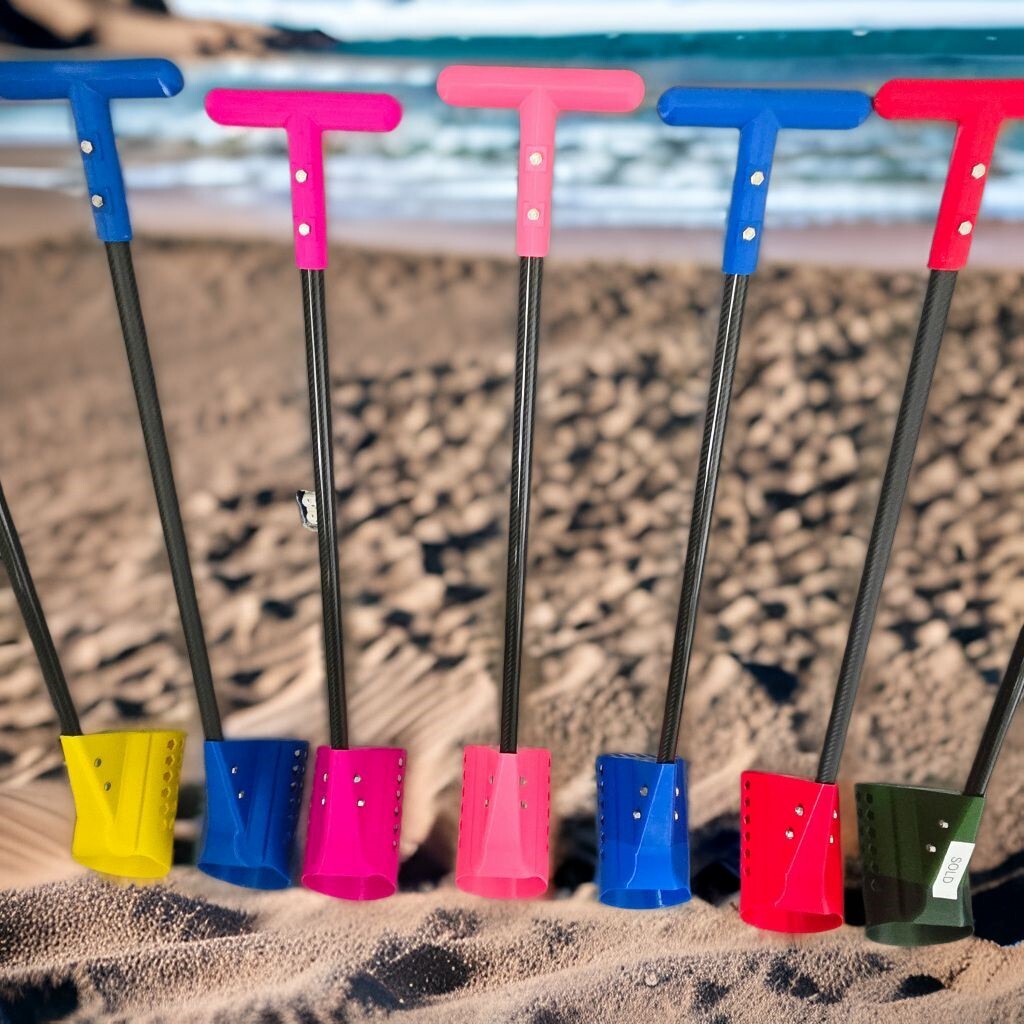
For digging, I use a scoop. In the wet sand, a good scoop lets you take a target out in one or two bites before the hole fills back in.
I build the carbon fiber Metal Detecting Beach Sand Scoop for exactly this kind of hunting.
Carry a pinpointer, a finds pouch, and a trash pouch. Pack out the trash you dig. It keeps the beach clean, and you will not dig the same bottle cap twice.
Beach Metal Detecting Rules to Check First
Not every beach is open to detecting. In Texas, Padre Island National Seashore is a big one to know. The Park Service says possessing or using a metal detector there is prohibited (NPS Padre Island), under the general national park rule in 36 CFR 2.1(a)(7). That rule makes an exception for a detector that is broken down and stored or packed so it cannot be used.
Texas state parks are also off limits without a permit. The state rule says it is an offense to operate or use a metal detector except as authorized by permit (31 TAC 59.134).
Lake beaches can be different. On U.S. Army Corps of Engineers lakes, metal detectors are permitted on designated beaches or other previously disturbed areas unless the District Commander prohibits them (36 CFR 327.14). Call the project office first.
City and county beaches set their own rules, so check the posted signs and the local ordinances. My guide on where you can metal detect covers the land types in more detail.
If You Find Someone’s Ring
Some rings mean a lot more to the owner than the gold is worth. If you find a ring with an inscription, or you hear about someone who lost one on that beach, try to get it back to them. I also help people recover lost rings and keys on land and in the water. You can read about that in my lost item recovery article.
Gear From Prospectors Cache
I keep detecting and prospecting gear in my Etsy shop, ProspectorsCacheShop, and in my Prospectors Cache eBay store.
Final Thoughts
Beach metal detecting rewards the person who pays attention. Check the tide chart. Go after storms. Hunt the falling tide. Use your beach mode and balance for the salt. Dig fast in the wet sand.
Above all, know the rules for that beach and respect the surf. Then go find something good.
Sources
- National Park Service: Beach Profile Changes
- NOAA National Ocean Service: What are spring and neap tides?
- TxDOT Hydraulic Design Manual: Astronomical Tides
- NOAA Tides and Currents
- Minelab Manticore Instruction Manual (4901-0428-2, PDF)
- Minelab: Frequently Asked Questions
- XP Deus II Instruction Manual (PDF)
- NOAA: Break the Grip of the Rip
- National Park Service, Padre Island National Seashore: Laws and Policies
- 36 CFR 2.1, Preservation of natural, cultural and archeological resources
- 31 Texas Administrative Code 59.134, Rules of Conduct in Parks
- 36 CFR 327.14, Public property (U.S. Army Corps of Engineers)
Written by Tom Ashworth
Prospectors Cache