

For Details on the project go to SNORKULUS.COM!
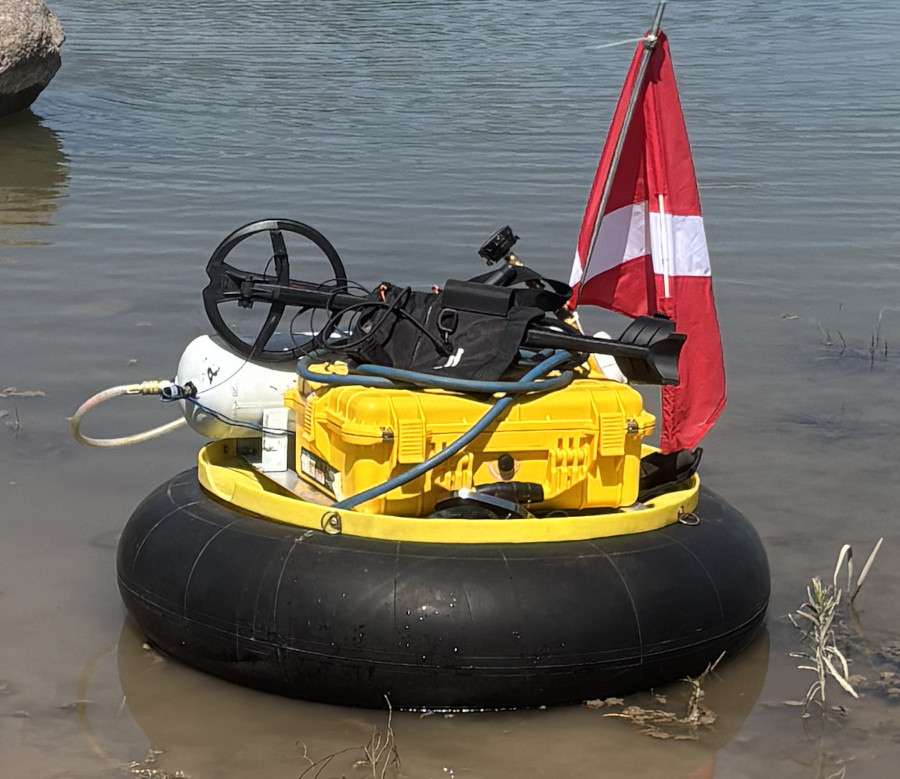
A Practical Hookah Diving System Built by Treasure Hunters
Discover the Benefits of the Snorkulus Hookah Diving System
The Snorkulus Hookah Diving System is revolutionizing the underwater treasure hunting experience. It offers a practical solution for those looking to explore shallow waters with ease and safety.
With the Snorkulus Hookah Diving System, users can enjoy longer dive times and improved comfort while searching for underwater treasures.
The SNORKULUS Hookah Diving System started as a simple idea: build a shallow-water air system that was affordable, portable, repairable, and customized for the way we actually hunt underwater.
Every Snorkulus Hookah Diving System is tailored to individual needs, making it a versatile tool for treasure hunters.
Visit the Snorkulus Hookah Diving System project documentation for comprehensive information on enhancements and safety features.
This project was not designed by a big dive equipment company. It was built by people who spend real time in shallow water looking for lost rings, coins, jewelry, keys, fishing gear, and other metal detecting targets. Me and my friends James, Nyssa, and Denise worked through the idea (Most of the work and design was from James and Nyssa) from the standpoint of real-world use: shallow water, careful searching, easy transport, and parts that regular people can understand and replace.
Every one of our units is a little different because every person’s needs are different. Some builds are made for longer run time. Some are made to be lighter and easier to carry. Some are mounted on carts. Some use larger flotation. That is one of the best parts of the design: it is not a locked-down mystery box. It is a practical project that can be studied, improved, customized, and repaired.
For the detailed project documentation, photos, diagrams, and updated build information, visit:
For those interested in shallow water exploration, the Snorkulus Hookah Diving System provides a viable solution for longer dive sessions.
The documentation and source project photos are also shown on the Gadget School SNORKULUS project page.
The Snorkulus Hookah Diving System is designed to meet the practical needs of its users, ensuring comfort and safety during dives.
Important Safety Warning
Understanding the capabilities of the Snorkulus Hookah Diving System is crucial for safe underwater exploration.
Hookah diving is dangerous. Underwater breathing equipment is life-support equipment. If something fails, the result can be injury or death.
As a battery-powered unit, the Snorkulus Hookah Diving System eliminates the concerns associated with gas-powered options.
The SNORKULUS MK1 is an experimental, home-built hookah diving system. It is not certified scuba gear. It is not commercial diving equipment. It is not professionally tested breathing-air equipment. It is not a substitute for scuba training.
This project should only be considered for very shallow water where you can immediately stand up if something goes wrong. Even that does not make it risk-free. Shallow water can still be dangerous.
Anyone considering a system like this should understand scuba-style breathing, regulator behavior, air supply failure, pressure effects, ascent discipline, hose hazards, entanglement risks, electrical hazards, contamination risks, and emergency procedures.
In plain English: do not build or use any homemade underwater breathing system unless you fully understand the risks and get the system inspected by qualified people.
What the SNORKULUS Is
The SNORKULUS is a battery-powered, surface-supplied hookah diving system for very shallow water. Instead of carrying a scuba tank on your back, the air system floats at the surface while air is supplied through a hose to a hookah regulator.
The goal is not deep diving. The goal is slow, careful, shallow-water searching.
For underwater metal detecting, that can be a huge help. When you are trying to recover a small target from sand, gravel, clay, or weeds, holding your breath over and over gets old fast. A surface-supplied air system can make shallow recovery work easier, but it also adds serious responsibility.
What We Use It For
We use these systems for shallow-water metal detecting and recovery work, including:
- Lost ring recovery
- Searching swimming areas
- Checking lake bottoms and beach areas
- Investigating underwater metal detector targets
- Working shallow spots where breath-hold hunting is awkward
- Gold prospecting and dredging work where legal and appropriate
Most targets are not treasure. Most are pull tabs, bottle caps, fishing weights, rusty junk, and pieces of modern trash.
But sometimes the target is a ring.
Sometimes it is a key.
Sometimes it is something someone thought was gone forever.
That is the exact kind of shallow-water search this project was built around.
Explore how the Snorkulus Hookah Diving System can enhance your treasure hunting experience.
Building a Snorkulus Hookah Diving System allows for customization and adaptability according to personal diving needs.
Why We Wanted an Affordable DIY System
Commercial hookah diving systems can be expensive. Many are also larger than what we need for shallow metal detecting. Our goal was to build something that used mostly common parts, many of them available from Amazon or similar suppliers.
The design goal was simple:
- Affordable parts
- Easy to understand
- Easy to repair
- Battery powered
- No gasoline motor near the air intake
- Customizable flotation
- Customizable battery size
- Useful for shallow-water metal detecting
- Built with parts that can be replaced without sending the whole unit back to a manufacturer
Battery power is one of the big advantages. A gasoline engine near an air intake creates an obvious concern: fumes. A battery-powered compressor removes that gasoline-engine exhaust issue from the system. That does not automatically make the air safe, but it does remove one major problem from the design.
Basic System Layout
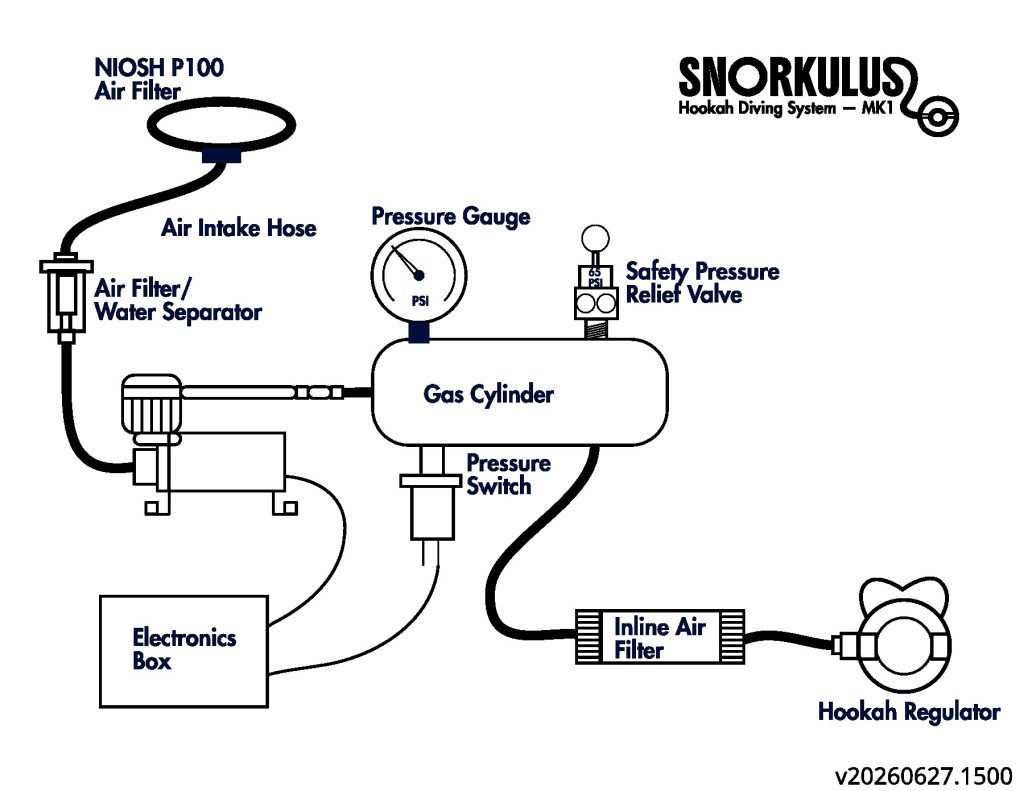
The basic air path is:
- Outside air enters through an intake filter.
- Air passes through a filter/water separator.
- The compressor pushes air into the tank.
- A pressure switch controls the compressor.
- A pressure gauge shows tank pressure.
- A safety pressure relief valve helps protect against over-pressure.
- Air passes through an inline filter.
- The diver breathes through a hookah regulator.
The SNORKULUS project page lists the pressure switch range around 45–60 PSI and includes a 65 PSI pressure relief valve in the design. These details matter because a hookah system needs controlled pressure, not just air coming out of a hose.
Wiring Diagram
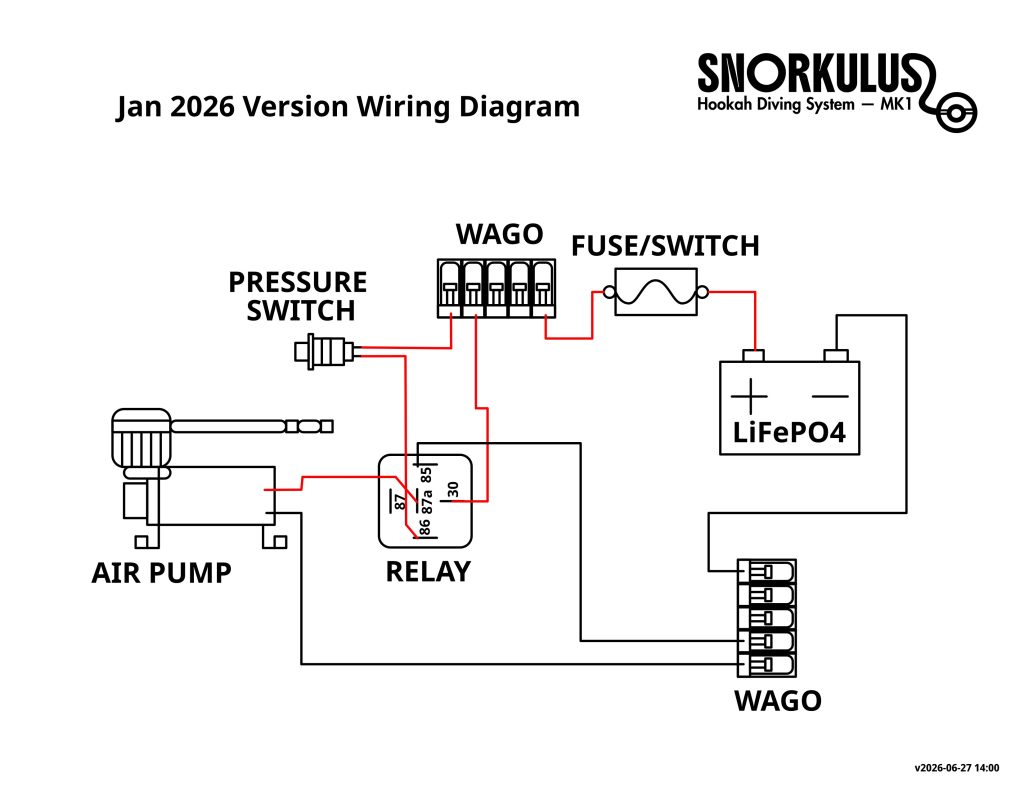
The electrical side uses a LiFePO4 battery, fuse/switch, WAGO connectors, relay, pressure switch, and air pump. The pressure switch tells the system when to run the compressor so the tank stays in the intended pressure range.
This is another reason the project is repairable. The system is built from understandable components instead of sealed proprietary electronics.
Different Builds for Different Needs
One thing I really like about this project is that everyone’s unit can be customized.
Prototype Build
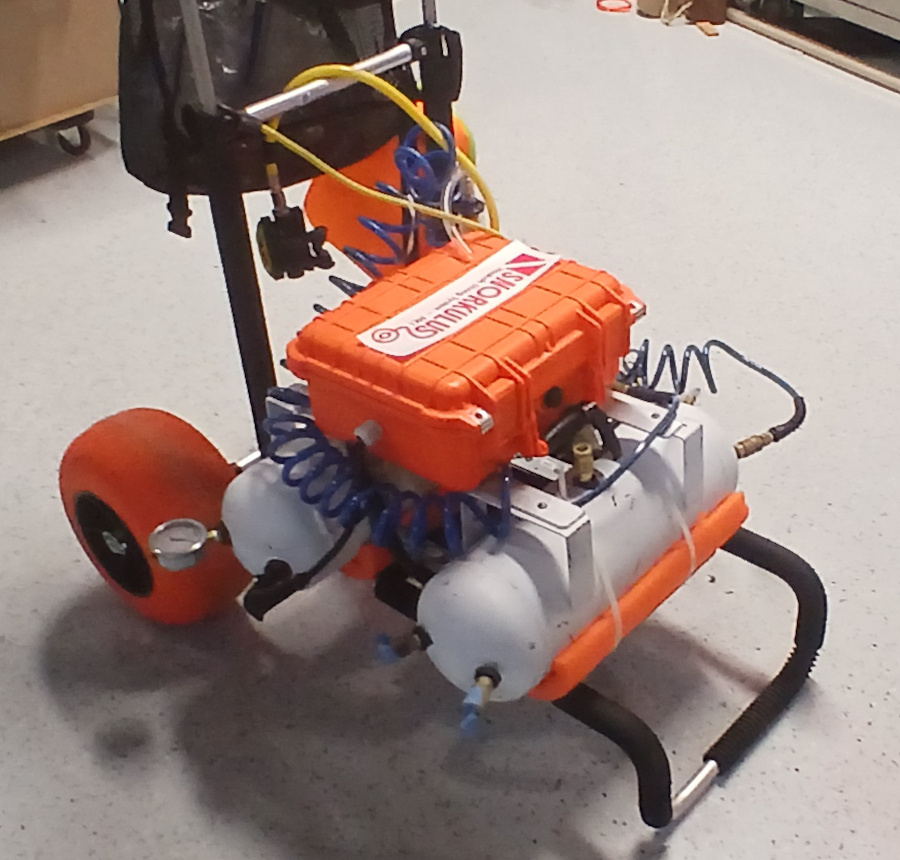
The first prototype proved the idea could work, but it also showed what needed improvement. Early builds helped identify balance, flotation, waterline, and weight issues.
Tom’s Extended Runtime Build
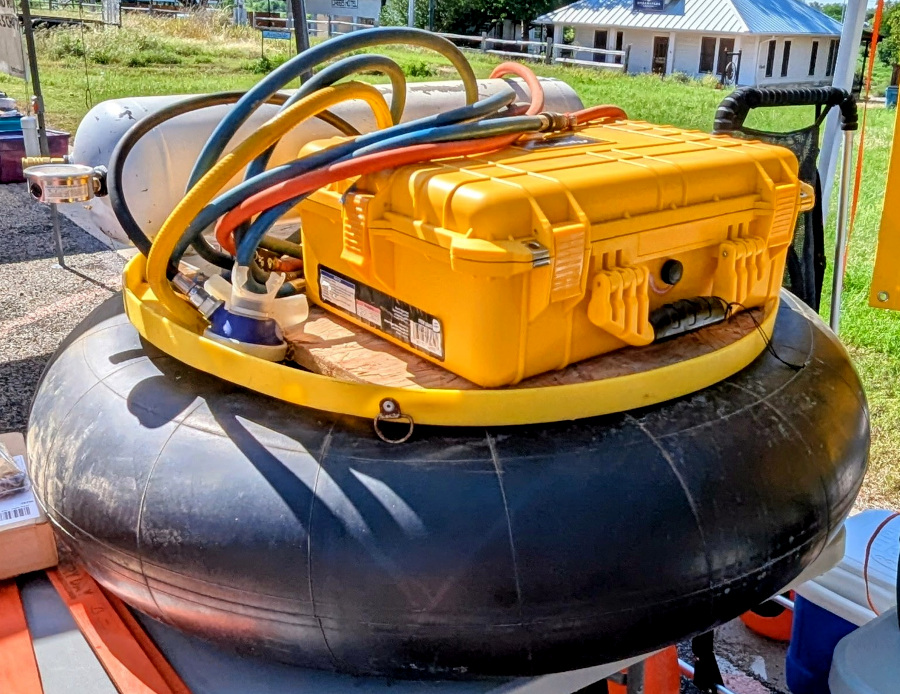
My version was built around longer underwater time. It uses a larger battery and a large inner tube flotation setup. The larger float gives the system stability and also provides a place to surface and rest.
This is the kind of build that makes sense for longer shallow-water metal detecting sessions.
Lightweight Build
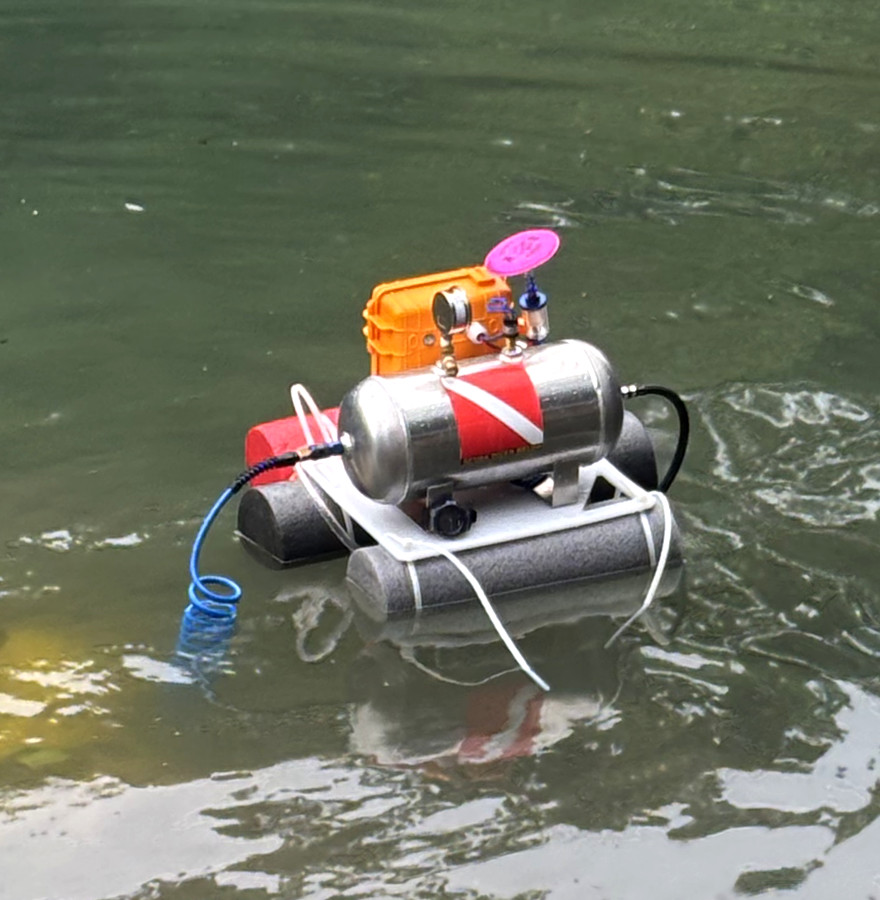
A lighter build trades runtime for portability. This kind of setup is easier to carry to the water and launch. For some people, that matters more than having the largest battery possible.
Foam rollers were used as flotation on this build, with extra flotation added to improve stability and balance.
Cart-Mounted Build
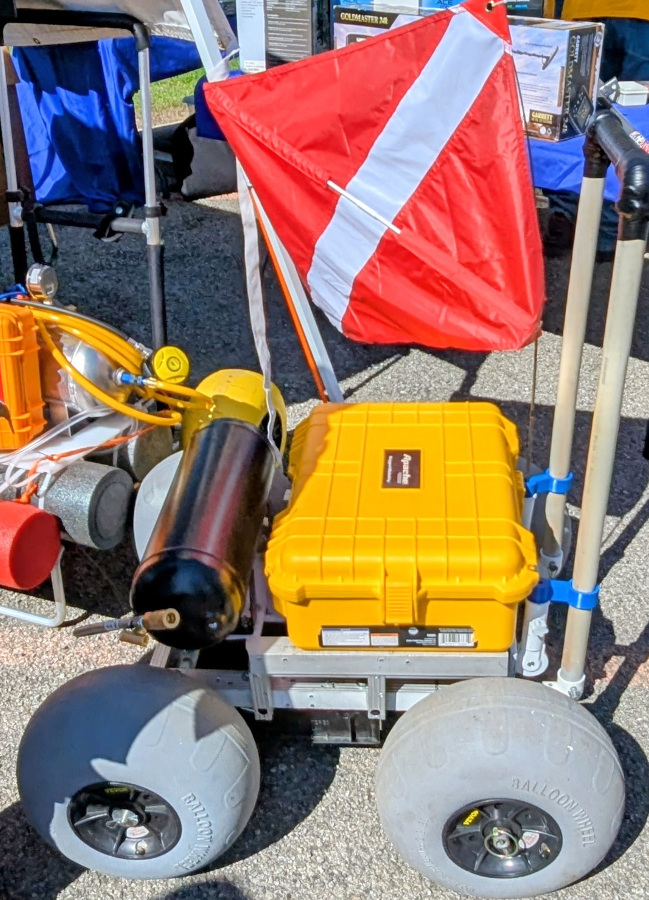
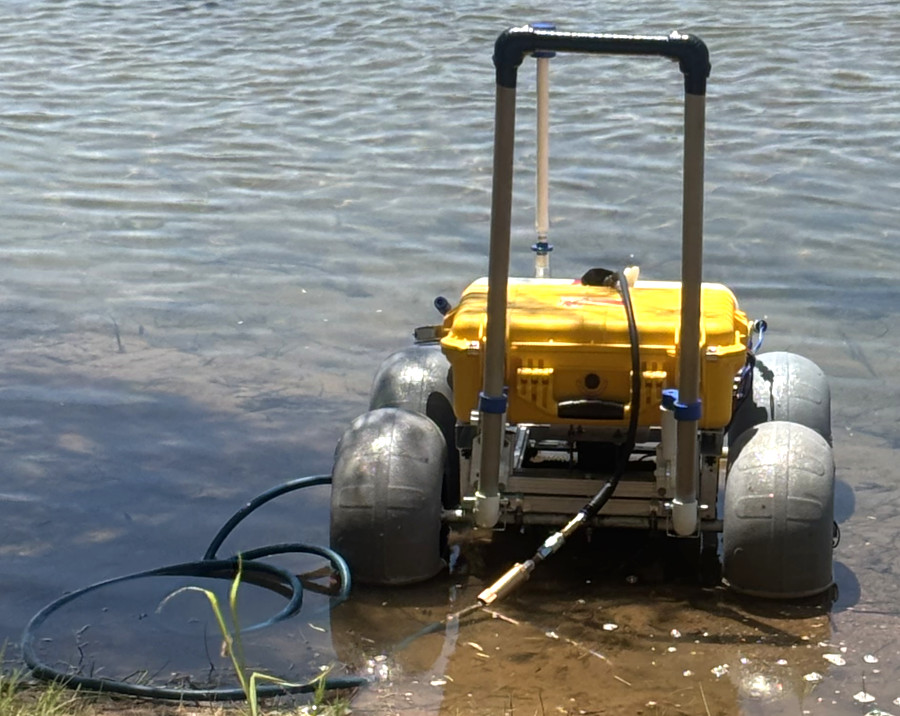
The cart-mounted version is one of the smartest designs. It is built around a beach cart so the whole system can be rolled down to the water. The beach tires also act as flotation.
That is the kind of practical field design that only comes from people actually using the equipment.
Bill of Materials
The parts list below is based on the documented SNORKULUS MK1 bill of materials. Prices may change, especially on Amazon, but this gives a realistic idea of what the project cost looked like when documented.
| Item | Qty | Price | Total | Notes |
|---|---|---|---|---|
| Tanks | 1 | $69.99 | $69.99 | Air storage tank |
| Pressure Switch | 1 | $18.96 | $18.96 | Controls compressor cycling |
| Battery | 1 | $55.99 | $55.99 | LiFePO4 battery |
| Battery Charger | 1 | $35.99 | $35.99 | Battery charging |
| Relay | 1 | $6.75 | $6.75 | Electrical control |
| Inline Fuse Switch | 1 | $14.99 | $14.99 | Power protection and switching |
| Spade Connectors | 1 | $24.99 | $24.99 | Electrical connections |
| WAGO Connector | 1 | $20.95 | $20.95 | Wiring connections |
| Air Intake Filters | 1 | $12.99 | $12.99 | Intake filtration |
| Misc Pipe Fittings Kit | 1 | $39.99 | $39.99 | Air fittings |
| Quick Connect Male | 1 | $14.99 | $14.99 | Hose connection |
| Quick Connect Female | 1 | $8.99 | $8.99 | Hose connection |
| Pressure Gauge | 1 | $9.99 | $9.99 | Pressure monitoring |
| Blow Off Valve | 1 | $11.45 | $11.45 | Pressure relief |
| Inline Filter | 1 | $16.55 | $16.55 | Additional filtration |
| Inline Filter Adapters | 2 | $9.99 | $19.98 | Filter connections |
| NIOSH P100 Filter | 1 | $17.48 | $17.48 | Particulate filter |
| Hookah Regulator | 1 | $39.99 | $39.99 | Breathing regulator |
| 10GA or 12GA Wire | 1 | $14.99 | $14.99 | Electrical wiring |
| SCUBA Dive Hose | 1 | $99.99 | $99.99 | Diver air hose |
| Dive Hose Adapters | 1 | $7.99 | $7.99 | Hose adapter fittings |
| Cable Loom | 1 | $5.03 | $5.03 | Wire protection |
| Water Tight Case | 1 | $23.99 | $23.99 | Electronics/battery protection |
| Stainless Bonded Washers | 1 | $8.45 | $8.45 | For attaching case to base |
Documented total: $601.45
That is not pocket change, but compared to many commercial hookah diving systems, it shows why the project is attractive to people who are comfortable building, testing, and improving their own equipment.
Filtration Notes
The documented system uses multiple filters, including a 3M NIOSH P100 particulate filter and additional inline filtration. That sounds good, but it is important to understand the limitation:
Familiarizing yourself with the Snorkulus Hookah Diving System ensures a safer and more enjoyable underwater experience.
A filter is not proof of breathable air.
A particulate filter can reduce particles, but that does not mean the system has certified breathing air. Air quality, contamination, compressor behavior, water intrusion, hose materials, and pressure behavior all matter.
The convenience of the Snorkulus Hookah Diving System makes it an ideal choice for treasure hunters.
Before any underwater use, a system like this should be inspected and tested by people qualified to evaluate breathing-air equipment.
Why Custom Builds Make Sense
There is no single perfect SNORKULUSlayout because every user has different priorities.
A person who wants maximum runtime may choose a larger battery and larger flotation. A person who has to walk a long way to the water may choose a smaller, lighter system. Someone hunting beaches may prefer a cart-mounted build. Someone hunting protected swimming areas may prefer a compact float.
That is why this project is interesting. It is not just one machine. It is a design approach.
The common idea is:
- Keep it shallow.
- Keep it simple.
- Keep it repairable.
- Keep it inspected.
- Keep improving it.
- Never pretend homemade life-support equipment is automatically safe.
Final Thoughts
The SNORKULUS project exists because shallow-water treasure hunting is exciting, frustrating, and sometimes very rewarding. Anyone who has spent time detecting underwater knows the feeling of chasing a faint signal through sand, rocks, and mud, wondering if it is another bottle cap or someone’s lost wedding ring.
This system was built for that kind of work.
It was built by people who wanted something affordable, practical, and customizable. It uses mostly common parts. It can be repaired. It can be modified. It can be improved.
But the most important rule is this:
Breathing underwater is serious.
Do not trust a homemade system just because it works. Study it. Test it. Get trained. Get it inspected. Use it only in shallow water where you can stand up immediately. Respect the water every time.
For detailed instructions, updated documentation, diagrams, and project information, visit:
Suggested Image Credits / Source Note
Images, diagrams, and bill of materials are based on the SNORKULUS MK1 project documentation published on the Gadget School SNORKULUSproject page.
With the Snorkulus Hookah Diving System, you can confidently dive into shallow waters without the burden of traditional equipment.
Remember, the Snorkulus Hookah Diving System is intended for recreational use in safe conditions only.
For ongoing projects and updates related to the Snorkulus Hookah Diving System, please refer to our website.
Respect the water every time. For detailed instructions, updated documentation, diagrams, and project information, visit: snorkulus.com The Snorkulus Hookah Diving System makes it super easy to explore the depths and embark on some underwater treasure hunting adventures. With its lightweight design, you can enjoy the freedom of movement while discovering hidden gems beneath the waves. Just gear up, stay safe, and let the Snorkulus take you on an unforgettable underwater journey! Don’t forget to check our site for the latest updates and tips on maximizing your diving experience.
[…] Diving for gold can be dangerous if you ignore common sense. It can also be done safely when you respect the water, use proper equipment, and stay within your limits. […]
So, if you’re out there with your metal detector, scanning the sand or the soil, do you ever wonder if the real gold isn’t just in the ground… but in the company you keep while you’re searching?
[…] Hookah Diving System […]